How to Handle Deck Repair for Winter Damage in Winston-Salem, NC
Winston-Salem winters are not as harsh as winters up north, but they can still be rough on a deck. Rain, freezing nights, ice, and quick temperature swings can slowly wear down boards, fasteners, and framing. If you are seeing damage after winter, reliable deck specialists can help you figure out whether the deck needs a few repairs or something more.
Spring is usually when these problems show up. A deck that looked fine in the fall may have cracked boards, raised screws, soft spots, or staining by March. Catching those signs early can keep small issues from turning into bigger repairs.
What Piedmont Triad Winters Do to Outdoor Decks
The biggest issue in the Piedmont Triad is moisture. Rain soaks into wood, cold nights can freeze that moisture, and warmer afternoons thaw it again. That constant wet-cold-warm cycle puts stress on deck boards and framing.
Wood decks are especially affected when they have not been sealed or stained in a while. Moisture can work into the boards, causing cracks, cupping, warping, and popped fasteners. A deck in Winston-Salem, Kernersville, Clemmons, or Advance that has gone several years without maintenance may show winter damage quickly.
Composite decking handles winter differently. Since it does not absorb water the same way wood does, it is less likely to crack or warp from freeze-thaw cycles. Most winter issues on composite decks are surface problems like mildew, leaf stains, or dirt buildup.
Signs of Winter Damage to Look For
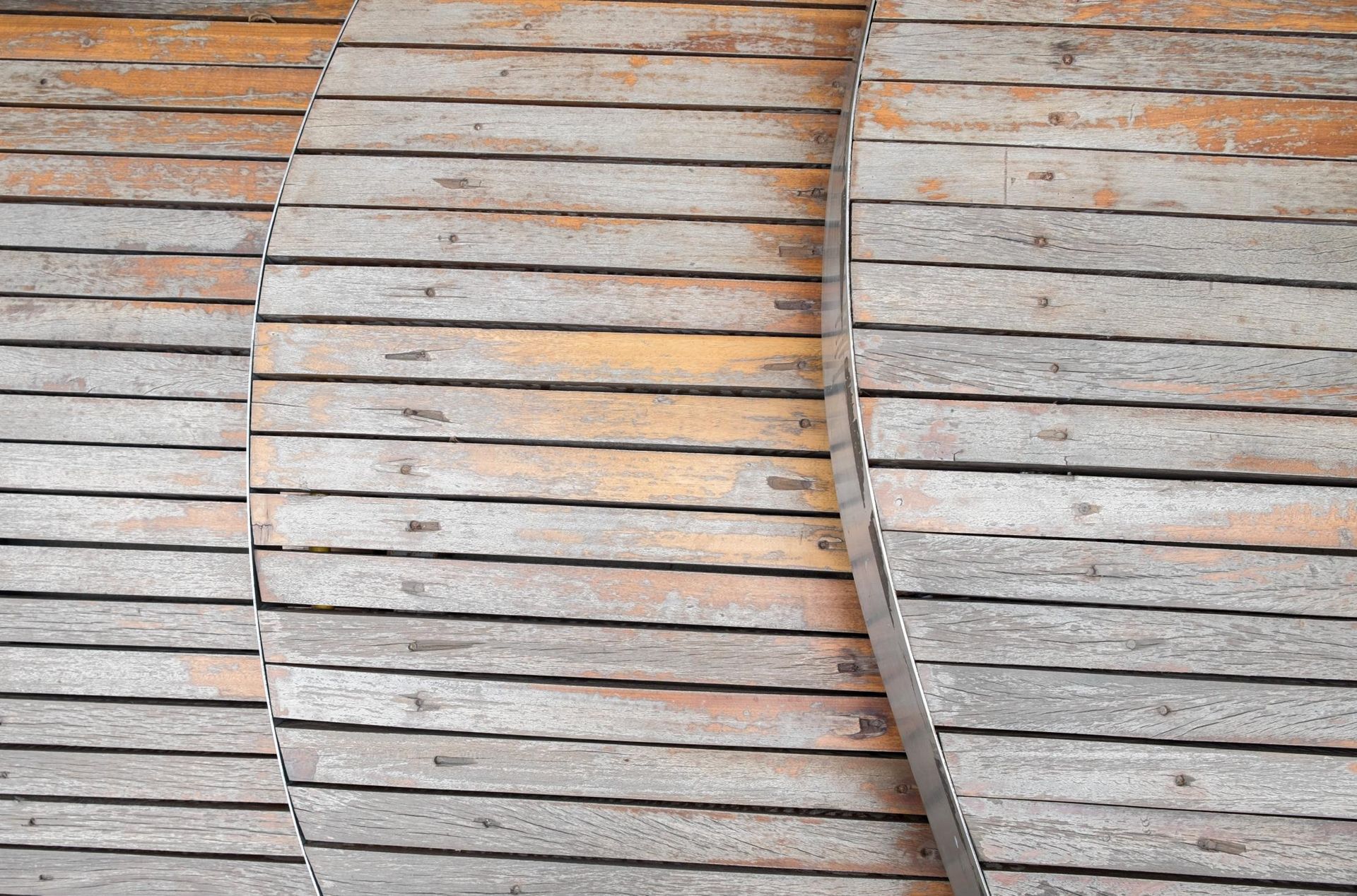
A spring walk-through can tell you a lot about your deck. Start with the surface boards. Look for cracks, splits, cupping, warping, or areas where boards no longer sit flat.
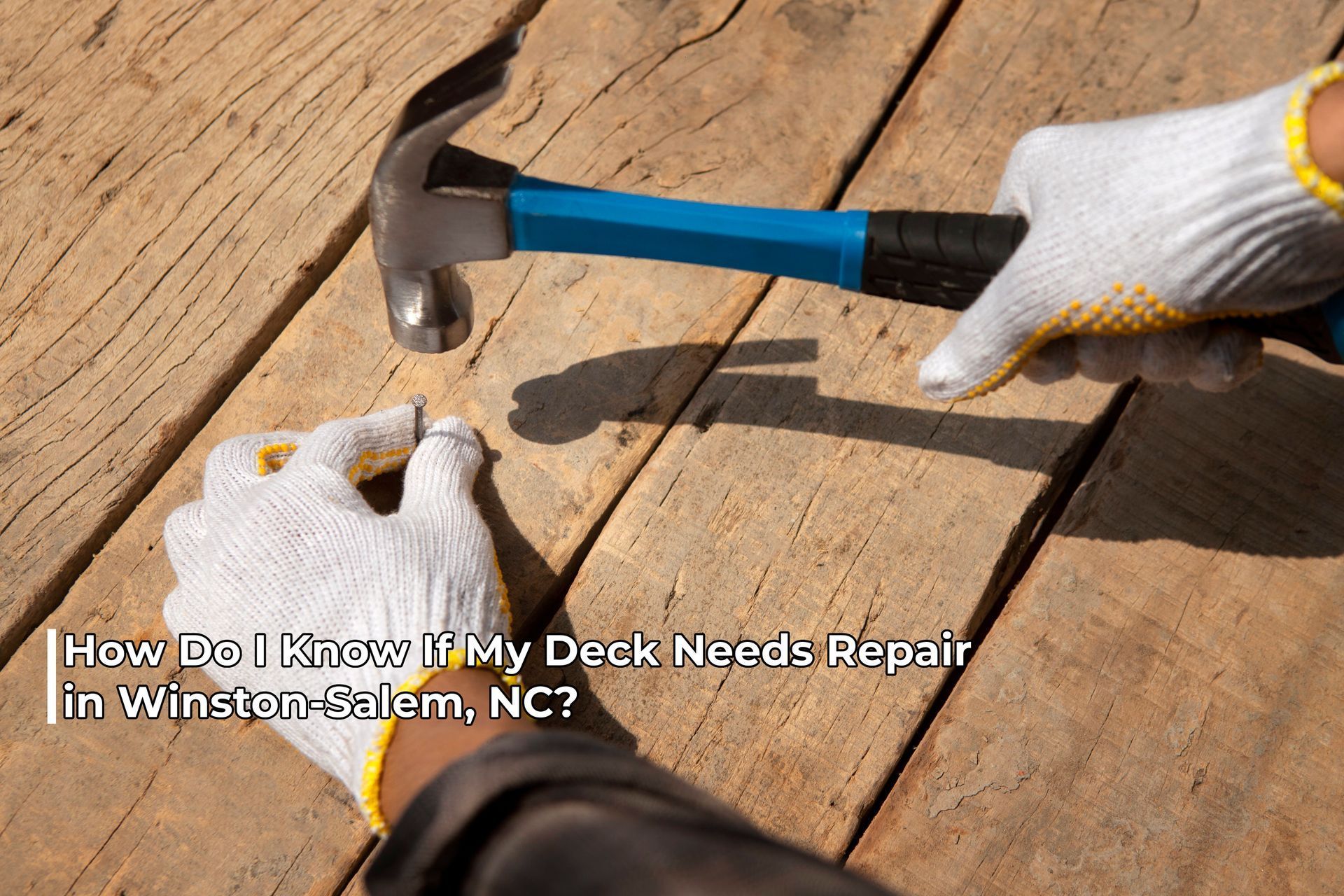
Check for raised screws or nails, too. Freeze-thaw movement can slowly push fasteners upward. These can catch shoes, furniture legs, or bare feet, and they may also point to movement in the boards.
Walk across the deck and pay attention to soft or spongy spots. A small soft area can mean moisture has started working below the surface. Softness near the ledger board, posts, or stairs should be taken seriously.
The ledger board also deserves attention. This is where the deck attaches to the house. Look for staining, gaps, loose flashing, or separation from the wall.
How Wood and Composite Decks Handle Winter Differently
Wood decks usually show winter damage through cracking, cupping, lifted fasteners, and soft spots. These problems are more common when the deck has not been stained or sealed within the last two to three years. In North Carolina’s humid climate, untreated wood can break down faster than many homeowners expect.
Composite decks usually need less winter repair. The main concerns are mildew, discoloration, and staining from leaves or debris that sat on the surface during wet weather. These can often be cleaned with the right products and a soft-bristle brush.
If composite boards are cracked, sagging, or warped, that is less common. In that case, the issue may be the installation, spacing, or support structure underneath the boards.
Repair vs. Replace: How to Think Through the Decision
Small repairs make sense when the deck structure is still solid. If only a few boards are cracked, a handful of fasteners are raised, or one section has surface damage, a targeted repair may be enough. This is especially true when the posts, beams, joists, and ledger board are still in good shape.
Replacement becomes worth discussing when the damage is spread across the deck. If the framing has rot, the posts are soft, the ledger is compromised, or the deck is 15 years old or older, patching may not solve the real problem.
Some older pressure-treated decks still have solid framing but need a new surface. In those cases, replacing worn wood boards with composite decking can be a good long-term option. It reduces future maintenance and gives the deck a cleaner, longer-lasting surface.
Getting a Professional Assessment in Winston-Salem
If your deck has several signs of winter damage, it is smart to have the structure checked before the outdoor season starts. A professional assessment looks beyond the surface boards and reviews the framing, posts, stairs, ledger board, and decking.
At Decked Out of the Triad, owner Steve Peterson has evaluated, repaired, and rebuilt decks across Winston-Salem, Clemmons,
Kernersville, Advance, and Greensboro for more than 34 years. If repair makes sense, you will know what needs to be fixed. If a rebuild is the better option, we can walk you through a clear plan.
Winter damage does not always mean the whole deck is failing. The key is finding out what is cosmetic, what is structural, and what needs attention before the next season of use.
Related Topics: